
- Some seaweeds, such as kombu, have relatively high arsenic content, so caution is needed regarding consumption frequency (refer to surveys by the Ministry of Health, Labour and Welfare and WHO reports).
- Substances generated during the smoking of katsuobushi (bonito flakes) and the drying of niboshi (dried sardines) (polycyclic aromatic hydrocarbons and aldehydes) raise concerns about long-term effects. Storage and selection are important.
- While regulatory authorities consider MSG (monosodium glutamate) safe at normal intake levels, some suggest that sensitive individuals or those who use it frequently should avoid it.
- Shiitake mushroom dashi is considered relatively safe, but there have been cases of residual pesticides in imported products, so it is recommended to choose domestic, organic, or reliable sources.
- The countermeasures are three-fold: "diversify ingredients," "reduce risks through storage and cooking," and "choose reliable sources."
Is Japanese Dashi Really "Unconditionally Healthy"?
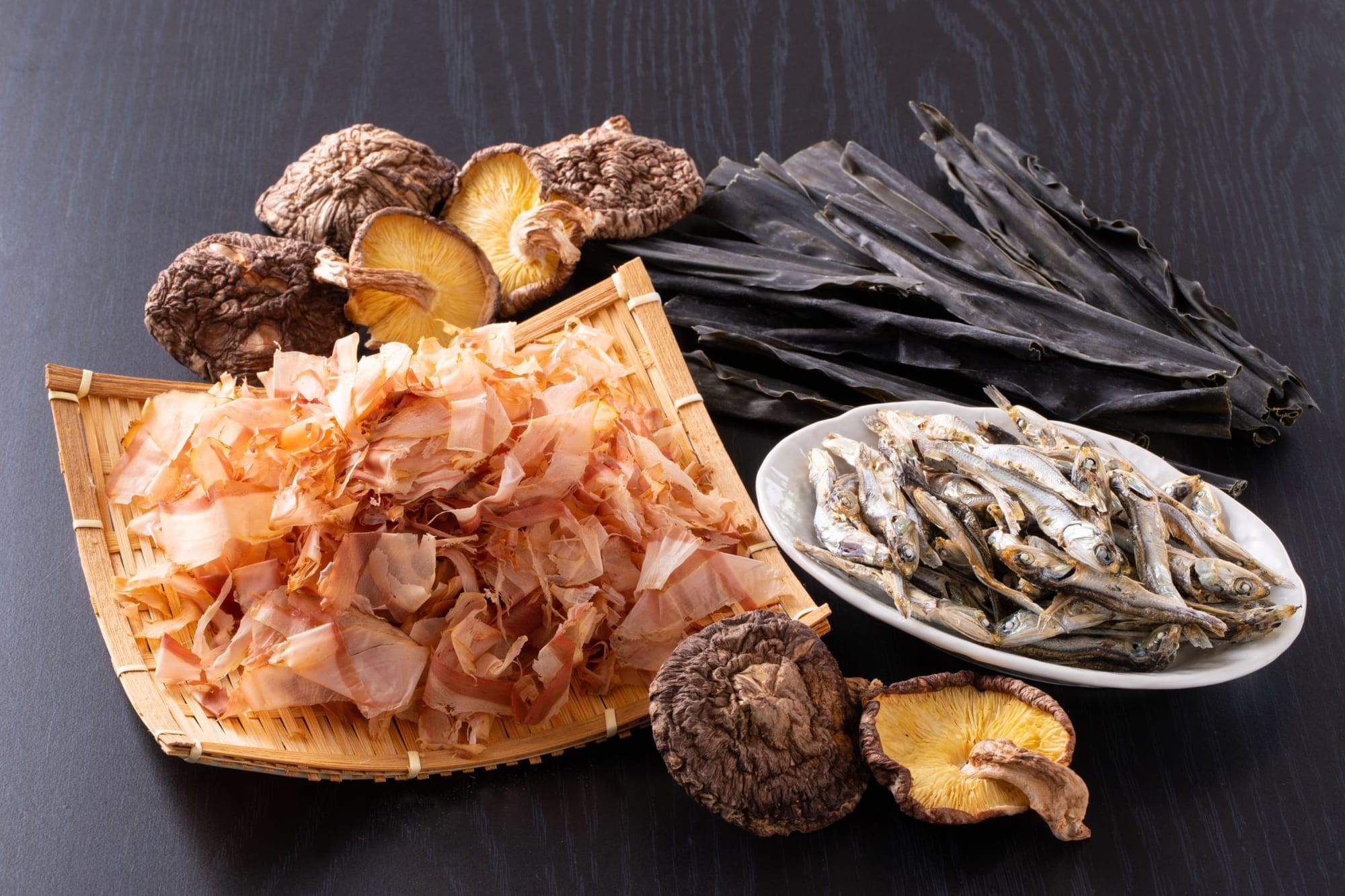
Dashi is the soul of Japanese cuisine. We, too, regularly use it in miso soup and simmered dishes, but depending on the raw materials and processing methods, there are some "points to be aware of." While Japanese food is globally recognized as healthy, concerns have been raised about harmful substances in dashi ingredients like seaweed and dried foods, as well as chemical substances generated during manufacturing and storage. This time, focusing on kombu, katsuobushi/niboshi, MSG, and shiitake mushrooms, we will introduce practical countermeasures that we have personally tried and found easy to incorporate into daily life.
Kombu and Arsenic — Risks to Know and How to Manage Them
What's the problem with arsenic?
Seaweeds are rich in minerals, but some, like kombu, tend to contain relatively high levels of arsenic (a non-essential toxic element). Surveys by the Ministry of Health, Labour and Welfare and WHO reports suggest that long-term arsenic exposure is linked to cancer, skin lesions, cardiovascular disease, and diabetes. In Japan, where rice and seaweed are consumed in large quantities simultaneously, it is important to note that the intake amount can relatively increase.
Daily countermeasures
Here are some easy-to-implement measures: do not use excessive amounts of kombu, steep it for a short time (longer simmering increases dissolved components), lightly wash kombu before use, and diversify dashi ingredients (combine with shiitake mushrooms or a small amount of katsuobushi instead of relying solely on kombu). Pregnant women and small children should be particularly mindful of their consumption frequency.
Katsuobushi and Niboshi Blind Spots — Substances Generated by Smoking and Drying
Substances generated by smoking and oxidation products
Katsuobushi is traditionally made by repeatedly smoking and drying, a process that can generate substances like polycyclic aromatic hydrocarbons (PAHs). In Europe, regulations and standards are sometimes set for certain smoked products. Additionally, it has been reported that during the drying and storage of niboshi, lipid oxidation progresses, leading to the formation of aldehydes and other products. Some of the savory aroma may originate from these oxidation products.
Tips for selection and storage
When choosing, check the manufacturing method labels (additive-free, low-temperature drying, presence of preservatives) and, if possible, select products from reliable manufacturers and regions. Store in the refrigerator or freezer to slow down oxidation, and use as soon as possible after purchase for peace of mind. Our team's experiments showed that freezing significantly improved the retention of aroma and flavor.
MSG (Chemical Seasoning) and Commercial Powdered Dashi — Discerning Choices and Alternatives
Safety discussions and choosing what's right for you
MSG (monosodium glutamate) is widely used worldwide, and food safety agencies in various countries recognize its safety at normal intake levels. On the other hand, some people report hypersensitivity symptoms, and others wish to avoid food additives. Powdered dashi offers convenience, but check the ingredients and additive labels, and if necessary, choose additive-free or clearly labeled products.
Easy alternative: simple homemade dashi
When you want to reduce effort, the "cold brew dashi" style is convenient and flavorful: soak shiitake mushrooms and kombu in water overnight, store in the refrigerator, and then briefly heat. In our own homes, we also prepare shiitake kombu cold brew dashi on busy days. If you have the time, it's recommended to rotate ingredients to avoid imbalances.
Is Shiitake Dashi Safe? Checking the Origin is Key
Relatively safe, but be careful with imports
Shiitake mushrooms are generally considered a food with low pesticide residues, and they fall into a relatively clean category in EWG's evaluations. Especially domestic shiitake mushrooms are often grown organically or using traditional methods, providing a sense of security. However, there have been reports of imported products exceeding residual standards, so it is important to check origin labels and organic/pesticide-free indications.
Tips for use
Dried shiitake mushroom dashi has a strong umami flavor, and combining it with kombu or a small amount of katsuobushi enhances satisfaction. Since the rehydrating liquid can be used as is, ingredients are not wasted. We also find it helpful to always have dried shiitake mushrooms on hand, as they allow us to easily make rich dashi.
Summary
Japanese dashi is delicious and nutritionally excellent, but depending on "ingredient imbalance," "processing methods," and "storage methods," there are risks that should be avoided. The countermeasures are simple: diversify ingredients (don't rely solely on kombu), choose reliable products that are prone to degradation from high-temperature smoking or long-term storage, and check labels for MSG and powdered dashi, reducing their use as needed. Since our geefee team started being mindful of these points in our daily meals, we feel that we can achieve both taste balance and peace of mind. Please try to incorporate these tips within a reasonable scope.
Disclaimer: The information in this article is for general informational purposes only and does not constitute medical advice. Please consult a qualified healthcare professional before making any health-related decisions.