
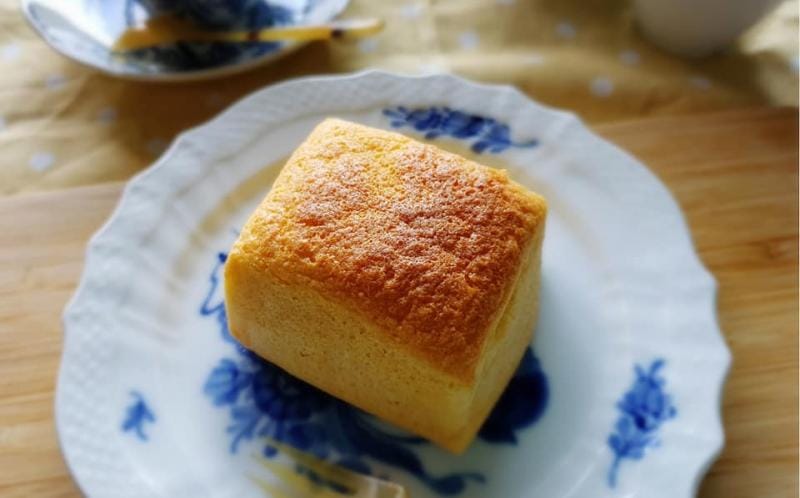
- With a simple process of just mixing and baking, you can achieve a fluffy and moist Taiwanese-style Castella cake.
- Gluten-free: We used coconut flour and rice flour instead of wheat. The gentle aroma of coconut creates a lovely, delicate flavor.
- The secret is slow-baking at a low temperature (150°C) in a water bath (bain-marie). For the mold, a recycled milk carton works perfectly.
- The cake keeps for about 3 days in the refrigerator and can also be sliced and frozen. You can keep the sugar content low by using alternative sweeteners like Lakanto.
Fluffy and Light! Gluten-Free Taiwanese Castella Cake
This recipe recreates the signature "jiggly and fluffy" texture of Taiwanese Castella cake in a simple, gluten-free way. When we tried it ourselves, we found that even with a few ingredients, the key lies in how you whisk the eggs—the result was surprisingly light. The subtle scent of coconut adds a nice accent, making it satisfying even with minimal sweetness. While using a milk carton is a handy way to make a mold, you can easily substitute it with a pound cake tin or any heat-resistant container.\ \Ingredients and Tools (Approximate size: one 8cm base milk carton mold)
\Ingredients
\- \
- 1 Large egg (separated into yolk and white) \
- 2 tsp Coconut oil
- 1 tbsp Milk (soy or almond milk also works)
- 1 tsp Agave syrup (honey or maple syrup also works)
- 1 1/2 tsp Coconut flour (it's highly absorbent, so a small amount is plenty)
- 1 1/2 tsp Rice flour (confectionery grade)
- 2 tsp Lakanto (or sugar)
Tools
- Oven (preheated to 150°C)
- 2 bowls and a whisk (electric mixer recommended)
- Mold (a milk carton cut to size, or a small pound cake tin)
- Parchment paper, aluminum foil, and a deep baking tray (for the water bath)
Instructions (Step-by-Step)
Preparation
Preheat your oven to 150°C. Cut a milk carton to a height of 8cm from the bottom and line the inside with parchment paper. Wrapping the outside bottom of the carton with aluminum foil helps prevent water from seeping in during the baking process.
Making the Batter
- Prepare two bowls and separate the egg white and yolk.
- In the bowl with the egg yolk, add the coconut oil, milk, and agave syrup. Mix well, then add the coconut flour and rice flour, stirring until the lumps disappear. Since coconut flour absorbs moisture quickly, make sure to mix it in thoroughly.
- In a clean bowl, whisk the egg white to create a firm meringue. Add the Lakanto in several stages, whisking until you have fine, stiff peaks.
- Add about 1/3 of the meringue to the yolk mixture and mix well to loosen the batter. Add the remaining meringue in two batches, folding it in gently with a spatula using a "cutting" motion so you don't deflate the air bubbles.
- Pour the batter into the mold and tap it against the counter a few times to release any large air bubbles.
Baking
Place the mold in a baking tray filled with hot water (a bain-marie) and bake in the preheated oven at 150°C for 40 to 45 minutes. Baking slowly at a low temperature is what creates that moist and fluffy texture. Once finished, remove it from the mold and let it cool slightly. It becomes much easier to slice once it has cooled completely. It’s delicious whether enjoyed fresh out of the oven or chilled from the fridge.
Baking Tips and Troubleshooting
If it doesn't rise or feels heavy
The main cause is usually the meringue losing its air. Make sure your bowl and whisk are completely clean and free of oil before beating the egg whites, and add the Lakanto (or sugar) gradually to build strong peaks. When folding the meringue into the batter, use a rubber spatula to scoop up from the bottom in a cutting motion to preserve as much air as possible.
If the surface cracks
This usually happens if the temperature is too high or the surface gets too dry. It is important to bake slowly at a low temperature and avoid opening the oven door too often. If necessary, you can lightly cover the top of the mold with aluminum foil halfway through to adjust the browning.
A note on coconut flour
Coconut flour is extremely absorbent, so a little goes a long way—be sure to stick to the measurements. Using too much can make the cake dry, which is why we balance it with rice flour.
Arrangements, Storage, and Nutrition
- Sweetener variations: You can swap agave for honey or maple syrup. Lakanto is erythritol-based, so it doesn't caramelize as easily as sugar and provides a very light sweetness.
- Oil substitutions: If you aren't a fan of coconut oil, you can use a neutral-flavored vegetable oil (like grapeseed oil), though this will change the flavor profile.
- Toppings: A dusting of powdered sugar (or powdered Lakanto) looks lovely, or you can serve it with coconut flakes or fresh berries for a more decadent look.
- Storage: The cake keeps for about 3 days in the refrigerator. You can also wrap individual thin slices in plastic wrap and freeze them for up to a month. To eat, let them thaw naturally or give them a light toast to bring back the texture.
- Nutritional points: Coconut flour is high in dietary fiber and is known for having a gentler impact on blood sugar levels. While coconut oil contains medium-chain fatty acids (MCTs), it's always best enjoyed in moderation.
Summary
This recipe uses minimal ingredients and simple steps, yet it delivers the look and feel of an authentic Taiwanese Castella cake. Whisking the eggs properly and baking in a low-temperature water bath are the secrets to success. In our experience, making it in this smaller size helps it stay extra fluffy, making it just the right portion for breakfast or a snack. We especially recommend this to anyone who loves the scent of coconut and follows a gluten-free lifestyle. We hope you enjoy making it your own!
Disclaimer: This article is intended for general informational purposes and does not provide specific medical or nutritional advice. If you have allergies or specific health conditions, please consult a doctor or specialist before trying this recipe.