
- It effectively strengthens the glutes and core.
- It significantly improves cardiovascular fitness.
- It corrects posture and enhances the way power is transferred through the body during daily movements.
- Some studies (such as those by ACE and various universities) suggest benefits for blood pressure and cardiovascular health.
What is the Kettlebell Swing?
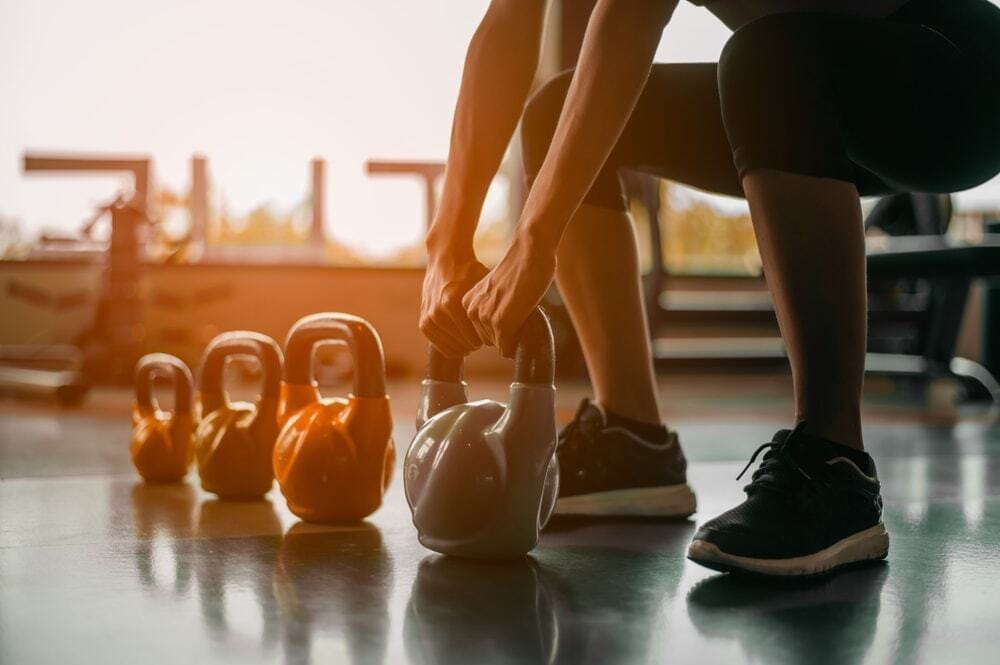
The Kettlebell Swing is a dynamic, full-body exercise that involves swinging a kettlebell between your legs and then powerfully extending your hips to propel it forward. It’s a fundamental movement in kettlebell training, often described as a “hip hinge” exercise. Unlike a squat, where the movement is primarily vertical, the swing emphasizes horizontal power generated from the hips and glutes. This exercise is renowned for its efficiency, simultaneously building strength, endurance, and power.
Why is the Kettlebell Swing Recommended for Home Fitness?
Benefits
- Full-body workout: Engages major muscle groups, including the glutes, hamstrings, core, and shoulders.
- High calorie consumption: The dynamic nature of the movement elevates your heart rate, making it excellent for cardiovascular health and fat burning.
- Short-term, high-efficiency training: You can achieve significant results in a short amount of time, making it ideal for busy individuals.
- Improves posture and core strength: Strengthens the muscles that support your spine, leading to better posture and reduced back pain.
Proper Technique and Form Check
Basic Steps (For Beginners)
- Stand with your feet slightly wider than shoulder-width apart, toes pointed slightly outward. Keep your center of gravity toward your heels.
- Bend your knees slightly and lean forward from the hips (hip hinge) to grip the kettlebell with both hands. Keep your back neutral (straight).
- "Hike" the kettlebell back between your legs, then powerfully extend your hips (thrusting your pelvis forward) to swing the kettlebell up to chest height using that momentum. Your arms act only as the axis of a pendulum; they should not lead the movement.
- Briefly brace your core at the peak to stabilize yourself, then let the kettlebell swing back between your legs. It’s easier to find a rhythm if you exhale as the bell goes up and inhale as it returns.
Form Checklist
- Is your back rounded? (It should always stay neutral.)
- Are you pulling it up with your arms? (It should be driven by hip extension.)
- Are your knees bending too much, turning it into a squat?
- Is your neck arched back? (Your gaze should be directed diagonally forward.)
Precautions, Weight Selection, and Injury Prevention
While this is a very safe movement, choosing the wrong weight or using poor form can lead to lower back or shoulder problems. It is vital to first solidify your form with a lighter weight. As a general guide, women often start with 8–12kg and men with 12–16kg, but this varies based on individual strength. When we first tried it, we practiced repetitions with 6–8kg plates to confirm our form before increasing the weight.
- Warm-up: Incorporate hip mobility drills, light glute bridges, and dynamic hamstring stretches.
- Progress gradually: If your form begins to break down, lower the weight.
- If you have pre-existing lower back pain or severe shoulder pain, please consult a doctor or physical therapist.
- Avoid slippery floors or cramped spaces. Choose a location clear of fragile objects.
Sample Training Plans: Combining Kettlebell Swings with HIIT
Kettlebell Swings pair exceptionally well with HIIT, allowing you to create efficient sessions in a short amount of time. Here are a few examples we recommend.
For Beginners: Focus on Tempo (Approx. 15 minutes)
- 10 Swings → 30 seconds rest (3 rounds)
- The goal here is to focus on your form and breathing.
For Intermediate Users: EMOM (Every Minute on the Minute) – 10 minutes
- Perform 12 swings at the start of every minute (rest for the remainder of the minute), continuing for 10 minutes.
- This serves as practice for maintaining proper form while keeping your heart rate up.
For Advanced Users: Tabata Style (Short and Intense)
- 20 seconds of maximum effort swings (Power Swings if possible) → 10 seconds rest × 8 sets (4 minutes total). Repeat for 2–3 sets.
- It is also effective to combine these with other exercises like Burpees or Push-ups.
Regardless of the plan, our team recommends stopping before your form starts to break down and beginning with a frequency of 2–3 times per week. In the short-term programs we tried, we truly felt our posture improve and noticed that standing up during daily activities became much easier.
Summary
The Kettlebell Swing is a practical exercise that allows you to "efficiently train the whole body in a short amount of time." By mastering the correct hip hinge and core stability, you can expect many benefits, including a lifted backside, improved cardiovascular fitness, and better posture. Start with a light weight to solidify your form, then gradually increase the load. It is also important to consult a professional if you have any concerns. We were a bit hesitant at first too, but as we continued, we could really feel the results, and it became quite fun. Please give it a try, keeping safety as your top priority!
Disclaimer: The information in this article is for general informational purposes only and does not constitute medical advice. Please consult a qualified healthcare professional before making any health-related decisions.