
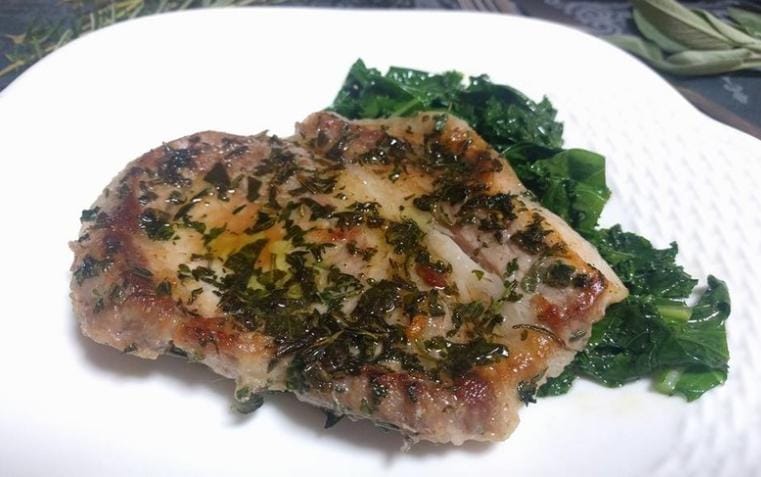
Packed with flavorful, antioxidant-rich herbs, this dish combines B-vitamin-rich pork with kale, which is loaded with fiber and vitamins. It’s quick to prepare, so we highly recommend it for your everyday weeknight dinner.
About this recipe
This is a simple recipe for pork sautéed with plenty of antioxidant-rich herbs, served with crisp kale. Using pasture-raised pork and grass-fed butter will further enhance both the flavor and the nutritional balance. It’s perfect for a quick weekday main or even as a slightly more indulgent weekend dish. When we made this ourselves, the herbal aroma was even more fragrant than we expected, resulting in a truly mouth-watering finish.Ingredients (Serves 2)
- 2 pork loin chops (approx. 2cm thick), 200g × 2 pieces
- 1 teaspoon finely chopped parsley
- 1 tsp thyme, finely chopped
- 1 teaspoon finely chopped sage
- 1 tsp rosemary (finely chopped)
- 1 tsp finely chopped oregano
- 1 clove garlic, minced (to taste)
- A small amount of grated lemon zest (to taste)
- 1 tsp sea salt (adjust to taste)
- A pinch of black pepper
- 1–2 tbsp coconut oil or ghee (for frying)
- 1 tbsp unsalted grass-fed butter (or ghee), for finishing
- 2 leaves Carino kale (or kale), stems removed and roughly chopped
- 1 teaspoon olive oil (as a substitute for kale), as needed
- A squeeze of lemon juice (optional, for the final touch)
Instructions
- Let the pork sit at room temperature for 10–15 minutes and gently pat away any moisture with a paper towel; this helps ensure it cooks evenly. If the meat is uneven in thickness, you can lightly pound it with the flat side of a knife to level it out.
- Mix the finely chopped herbs (parsley, thyme, sage, rosemary, and oregano), garlic, lemon zest, sea salt, and black pepper in a bowl, then press the mixture firmly and evenly all over the pork. If you have the time, let it sit for about 15 to 30 minutes to allow the flavors to meld—but if you’re in a hurry, it’s perfectly fine to start cooking right away.
- Heat your frying pan over medium to high heat, then add the coconut oil or ghee and let it coat the surface. Once the oil is hot, add the pork and sear each side for about 4–5 minutes (adjusting based on the thickness and heat level) until the surface is a beautiful golden brown.
- Keep an eye on the heat, as the herb-covered areas can burn easily. Flip it over and cook for another 4–5 minutes, then check to see if it is cooked through to the center. We recommend aiming for an internal temperature of 63°C (medium), but feel free to adjust this based on the thickness of the cut and your personal preference. Once it’s finished cooking, cover it with aluminum foil and let it rest for a few minutes.
- Add the butter (or ghee) to the same pan. Once it starts to melt, add the kale (stems removed and roughly chopped). Sauté quickly over high heat; once it has wilted and turned a vibrant green, season with a pinch of salt (feel free to add a little olive oil if you like). As a finishing touch, a quick drizzle of lemon juice adds a lovely freshness.
- Arrange a bed of kale on a plate and place the rested pork on top. Drizzle 1–2 teaspoons of the remaining juices from the pan over it, and serve with additional herbs or lemon if you like.
Health & Nutrition Highlights
This recipe is healthy for several reasons. Pork is rich in B vitamins, such as B1 and B6, which support energy metabolism and help with fatigue recovery. The herbs (like rosemary, sage, and thyme) contain polyphenols and antioxidants that help reduce inflammation. Kale is packed with dietary fiber, vitamins A, C, and K, folate, and calcium, contributing to both gut health and bone health. The ghee or grass-fed butter used for cooking adds wonderful flavor and provides fat-soluble nutrients like vitamin K2, allowing you to include high-quality fats in your diet in moderation. The key to this dish is keeping the salt to a minimum and letting the herbs and lemon bring out the flavor.Tips for customizing
- You can also make this delicious dish using chicken breast or lamb chops instead of pork. Just remember to adjust the cooking time based on the thickness of the meat.
- You can substitute dried herbs if needed, but using fresh herbs will really make the aroma stand out. If you prefer a bolder fragrance, feel free to increase the amount of thyme or rosemary.
- We also recommend adding more garlic to give it a bit of an edge, or mixing some whole grain mustard into the sauce to add extra tang and depth.
- If you aren’t a fan of kale, spinach or arugula make great substitutes. Adding some roasted sweet potatoes or quinoa makes this a truly satisfying meal.
- If you’d like to make this even healthier, you can also try cooking the kale with less oil by using a steam-braising method.