
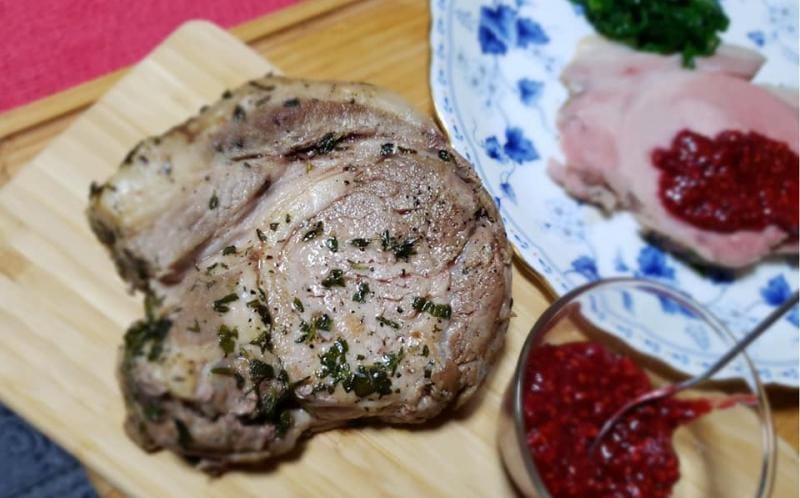
- A recipe that slowly slow-roasts pastured pork shoulder to tender perfection.
- Homemade cranberry sauce adds a pop of color and tartness. The sugar amount is totally adjustable!
- Aim for a core temperature of 63°C (145°F), and let it rest before slicing for maximum juiciness.
- We highly recommend pairing this with sautéed kale or roasted vegetables.
The Charm of Roast Pork and Cranberry Sauce for Your Seasonal Table
This is the perfect roast pork recipe for the colder months, served with a refreshing, vitamin-rich cranberry sauce. When we tried making this ourselves, the pork shoulder—slow-roasted at a low temperature—turned out incredibly tender. The tartness of the sauce cuts through the richness beautifully, making it a dish we wanted to eat again and again. Using pastured pork and grass-fed butter really elevates the flavor, but if you can't find them, regular pork and butter will still give you a delicious result.
Ingredients (Serves 4)
- Pork shoulder (roast/block), 600g
- Fresh sage and thyme (finely chopped), 1 tbsp total
- Salt and pepper, to taste
- Olive oil, 2 tbsp
- Cranberry sauce: 200g cranberries, 50g beet sugar (or regular sugar), 50ml water, 1 tsp cinnamon, 1 tsp lemon juice
- Garnish/Side: Kale, as needed (optional)
Instructions (with our tips!)
Prep and Marinating
Rub the pork shoulder with salt and pepper, then coat it evenly with the chopped thyme and sage. Drizzle with olive oil, place it in a sealed bag, and let it marinate in the fridge for about 20 minutes. If you have the time, leaving it for about an hour will deepen the flavors even more.
Roasting and Temperature Guide
Heat a skillet over medium heat and give the meat a nice, solid sear on all sides (about 1 to 2 minutes per side). Preheat your oven to 120°C (250°F), pop the seared pork in, and roast for 25 to 30 minutes. Flip it over and roast for another 25 to 30 minutes. Aiming for a core temperature of 63°C (145°F) ensures a safe and wonderfully juicy finish (this follows standard food safety guidelines). Since every oven is a little different, we highly recommend using a meat thermometer to check. Once it's done, wrap the pork tightly in aluminum foil and let it rest for about 30 minutes. Don't skip this—it's a crucial step to let the meat juices settle!
Making the Cranberry Sauce
In a small saucepan, bring the beet sugar and water to a boil, then add the cranberries. Once it returns to a boil, reduce the heat to low and simmer for about 15 minutes. When the berries have softened, stir in the lemon juice and cinnamon to balance the flavors. You can easily adjust the sweetness to your liking! If you want to cut back on sugar, swapping it for honey or maple syrup works beautifully. Alternatively, you can halve the sweetener and add a splash of red wine for a richer depth of flavor.
Finishing, Plating, and Variations
Slice the rested pork shoulder thinly and serve it generously topped with the cranberry sauce. For sides, kale quickly sautéed in olive oil or roasted root vegetables (like carrots, sweet potatoes, and beets) are fantastic pairings. Any leftover sauce will keep in the fridge for 3 to 4 days and is wonderful spooned over yogurt or paired with cheese. In our recipe testing, the lightly sweet sauce and fragrant herbs harmonized perfectly. Honestly, making an extra-large batch just to use in sandwiches the next day was absolutely exceptional.
Summary
Slowly roasted pork shoulder paired with homemade cranberry sauce is a dish that truly satisfies in both looks and taste. The secrets to success are aiming for that 63°C (145°F) core temperature, letting the meat rest properly, and tweaking the sugar to your preference. Try mixing up the seasonal ingredients and sides to make it a staple in your own home. It's a highly recommended recipe that our geefee team makes all the time!
Disclaimer: This article is intended for general culinary information. Please consult a doctor or specialist individually regarding health conditions, allergies, and food handling. When cooking, please pay close attention to heating temperatures and proper storage methods.
"}))