
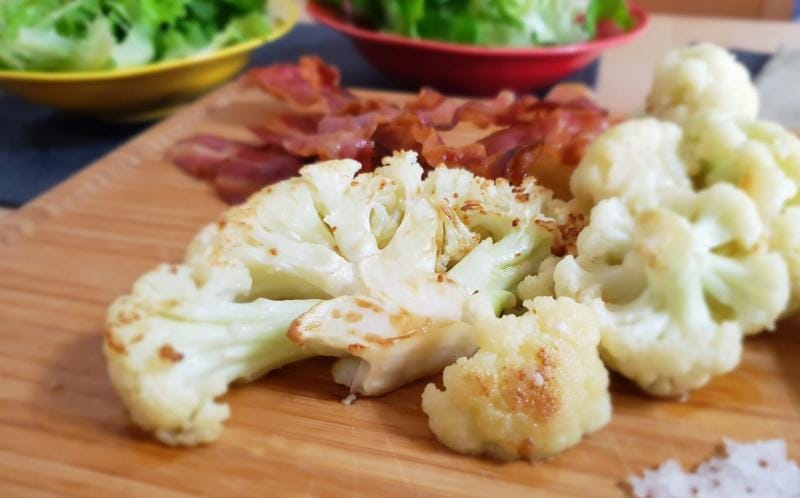
Summary: Cauliflower steak is low-carb, rich in fiber, and makes for an easy main dish or side. The secret is cutting the center into thick slices (about 2cm), searing them slowly, and finishing with a generous squeeze of lemon. You can easily customize it with bacon, cheese, or herbs. If you have leftovers, reheating them in a frying pan will bring back that delicious, roasted aroma.
What is Cauliflower Steak? First, an Introduction
Cauliflower steak is a dish where you place a whole cauliflower on a cutting board and slice it into thick "steaks," keeping the core intact so it holds its shape. It’s simple, but when you sear it slowly to get those fragrant, golden-brown char marks, it becomes incredibly satisfying. It’s an excellent, hearty vegetable option for anyone on a low-carb diet. When we tried it ourselves, we found that the acidity of the lemon and the aroma of garlic were more than enough to make the flavors
shine. It’s the perfect accompaniment to meat or fish dishes.
Ingredients and Prep (Serves 2)
Basic Ingredients
- 1 head of cauliflower
- 1–2 tbsp coconut oil (or olive oil)
- 1 clove garlic (minced)
- 1/2 tsp salt (adjust to taste)
- 1/2 lemon (for finishing)
- 2–3 slices bacon (optional)
Preparation Tips
- Slice the cauliflower from the center into steaks about 2cm thick. Keeping
the core attached helps prevent the steaks from falling apart.
- If your steaks are crumbling, try wrapping the cauliflower in plastic wrap and microwaving it for 30–60 seconds before slicing; this helps the structure stay together.
- Cauliflower is low in carbs and high in fiber. With only about 20–25 kcal per 100g (based on standard food composition tables), you can enjoy a generous portion without worry.
How to Make (Basic Steps) and Searing Tips
Basic Steps
- Slice the cauliflower into 2cm thick steaks starting from the center. Use the remaining edges as florets for another dish.
- Heat a frying pan over medium heat, add the oil and minced garlic, and sauté until fragrant.
- Place the cauliflower steaks in the pan and sear one side slowly (about 4–6 minutes) until you get a deep, golden-brown crust. Pressing down lightly helps ensure even contact with the pan for a better sear.
- Flip an
d cook the other side the same way. Once cooked through, sprinkle with salt and finish with a generous squeeze of lemon. If you’re adding bacon, cook it in a separate pan to drain the excess fat before serving for a healthier result.
Tips for Success
- If the heat is too high, the outside will burn while the inside stays hard. Aim for medium to medium-high heat.
- If your slices are particularly thick, cover the pan with a lid at first to steam-cook the
inside until tender. Then, remove the lid at the end to cook off any moisture and get that perfect char.
- Using coconut oil adds a lovely aromatic accent, while olive oil provides a milder flavor. If using extra virgin olive oil, keep the temperature a bit lower.
Variations and Pairing Suggestions
Easy Variations
- Add Cheese: Sprinkle some parmesan or cheddar on top at the end and let it melt for extra satisfaction.
- Miso Marin
ade: Brush on a little miso and mirin before cooking for a Japanese-style twist.
- Herbs & Nuts: Scatter some chopped parsley or toasted nuts over the finished steak for a fun contrast in texture.
Menu Ideas
- Main Dish: Grilled chicken + cauliflower steak (as a side)
- Fish Dish: Sautéed white fish + lemon for a light, refreshing meal
- Low-Carb Lunch: Cauliflower steak + green salad + boiled egg
Summary
Cau
liflower steak is a simple yet highly satisfying vegetable dish that is both low-carb and fiber-rich. In our kitchen tests, our absolute favorite method was cutting the center thick, searing it patiently, and finishing it off with plenty of fresh lemon juice. Try experimenting with bacon, cheese, or herbs to find your favorite version and make it a regular part of your table. If you happen to have leftovers, a quick toss in a frying pan will bring back that wonderful roasted fragrance.
Disclaimer: This article is intended for general informational purposes only. If you have food allergies, underlying medical conditions, or specific dietary restrictions, please consult with a doctor or nutritionist. Nutritional values are reference points and may vary depending on the ingredients and cooking methods used.