
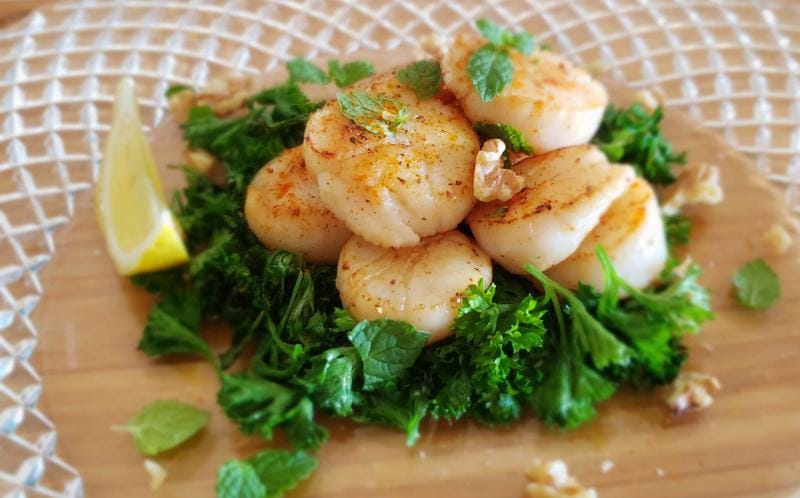
Scallop and Parsley Sauté — A Simple Yet Satisfying Dish
Scallop adductor muscles are low in calories, rich in protein, and packed with umami, making them a satisfying ingredient. Combining them with parsley, which contains iron and vitamin C, creates a well-balanced meal. When we tried it ourselves, simple preparation was delicious enough, and adding nuts and spices as accents was a hit with family and friends.
Ingredients (approximate for 2 servings)
- Scallops (raw, adductor muscle) 8 pieces
- Parsley (leaves only) 1 bunch (approx. 30-40g)
- Grass-fed butter or coconut oil 1 tbsp
- Salt and white pepper A pinch
- Salt (for seasoning) 1/2 tsp
- Cumin powder A pinch (optional)
- Walnuts 5 pieces (roughly chopped)
- Mint A few leaves (for garnish)
- Lemon 1/8 piece (for squeezing)
Instructions (Tips to avoid failure included)
Preparation
Pat the scallops thoroughly dry with kitchen paper. If moisture remains, they will steam when cooked, making it difficult to achieve a crispy sear. Lightly sprinkle 1/2 teaspoon of salt over them as a preliminary seasoning, and save a little white pepper for the finishing touch.
Cooking Method (Important: High heat for a short time)
Heat a frying pan over medium-high heat, then add grass-fed butter or coconut oil. Once the butter foams and becomes fragrant, add the scallops. Sear each side for about 30-60 seconds until a beautiful golden-brown crust forms. Overcooking will make them tough, so the goal is for the center to remain slightly moist. Once seared, remove them to a plate.
Finishing the Parsley
In the same pan, add the chopped parsley and sauté quickly for about 1 minute until it wilts slightly. Season with salt, white pepper, and a pinch of cumin powder if desired, then remove from heat. The trick is to cook the parsley for a short time, as overheating will cause it to lose color and aroma.
Plating and Finishing
Arrange the parsley on a plate, then place the scallops on top. Sprinkle with crushed walnuts and chopped mint, and garnish with a lemon wedge. Squeezing the lemon just before eating will add a refreshing acidity that brightens the entire dish.
Tips for Delicious Cooking and Arrangement Examples
- Bringing the scallops to room temperature before cooking helps them cook evenly and thoroughly.
- Using coconut oil or olive oil instead of butter makes this dish suitable for those with dairy allergies. Grass-fed butter adds a wonderful aroma and enriches the flavor.
- If you want to enhance the savory flavor, melt a small amount of butter and toss it with the scallops at the end for added richness.
- For a touch of spice, add a pinch of chili flakes; for more freshness, grate some lemon zest over the top.
- Using almonds or pistachios instead of walnuts can change the texture and flavor, making it enjoyable.
Nutritional and Health Benefits
Scallops are low in calories, high in protein, and contain B vitamins and zinc, which support muscle maintenance and metabolism. Parsley is rich in iron, vitamin C, and antioxidants, aiding in beauty and recovery from fatigue. Adding walnuts provides beneficial unsaturated fatty acids, increasing satiety. We found this dish to be highly satisfying and healthy, especially for those on a diet.
Storage and Consumption Notes
Fresh scallops are best consumed quickly. Cook them as soon as possible after purchase, and if refrigerating, use them within 1-2 days for safety. Cooked scallops tend to become tough the next day, so if reheating, warm them gently for a short time. Individuals with shellfish allergies should avoid this ingredient.
Conclusion
Scallop and Parsley Sauté is a simple, nutritionally balanced dish that highlights the natural flavors of its ingredients. It's quick to prepare, making it perfect for weeknight dinners. Our experimental twists (the combination of cumin, nuts, and mint) offer an easy way to enjoy new flavors, so please give them a try.
Disclaimer: This article is for general informational purposes only. Individuals with food allergies, specific medical conditions, or those undergoing treatment should consult a doctor or nutritionist before making dietary decisions. Nutritional values are estimates and may vary depending on cooking methods and individual ingredient differences.