
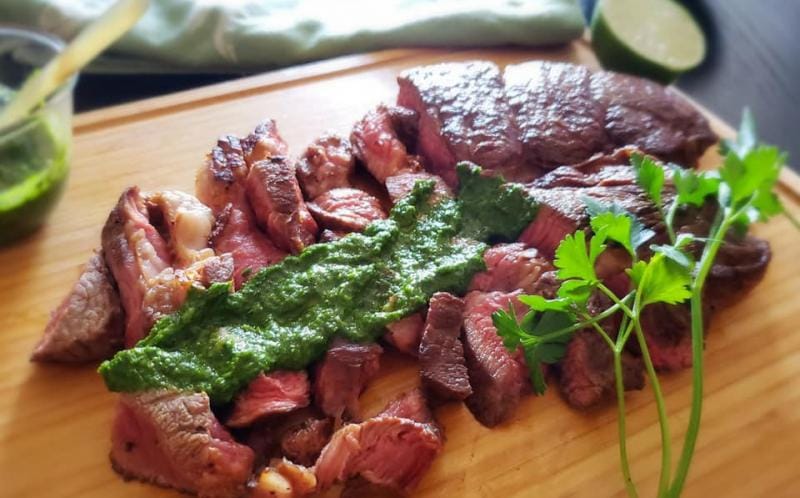
- This recipe features lean grass-fed beef with a refreshing Argentinian chimichurri sauce.
- The sauce can be made in advance and pairs well with chicken and fish, not just beef. Herb proportions can be adjusted to your liking.
- Grilling tips: Bring to room temperature, sear over high heat, then cook over medium heat checking internal temperature, and rest before slicing for delicious results.
Intro: The Allure of Grass-Fed Beef and Chimichurri
Chimichurri is an herb sauce originating from Argentina, where Italian parsley, acidity, spiciness, and oil are harmoniously balanced. Grass-fed beef is delicious and lean, making it an excellent match for the refreshing chimichurri. When we tried it, simply seasoning the steak with salt and pepper and then adding the sauce enhanced the meat's flavor beautifully.
Ingredients (2-3 servings)
- Grass-fed beef (for steak) 600g (adjust based on thickness)
- Salt 1 tsp
- Paprika powder 1 tsp
- Black pepper 1/2 tsp
- Olive oil (for grilling) 1 tbsp
Chimichurri Sauce
- Italian parsley (roughly chopped) 1 cup
- Cilantro (optional) 1 bunch (omit if you dislike it)
- Lime juice 1 tbsp (lemon can also be used)
- Red wine vinegar 1 tbsp
- Oligosaccharide or honey 1 tsp (adjust sweetness to taste)
- Garlic (minced) 1/2 tsp (optional)
- Cayenne pepper a pinch (adjust spiciness)
- Extra virgin olive oil 1-2 tbsp
Instructions (Step-by-Step)
1. Preparation
Take the beef out of the refrigerator about 30 minutes before cooking to bring it to room temperature. This allows for more even cooking to the center. Season the surface with salt, paprika powder, and black pepper, then lightly coat with olive oil.
2. Make the Chimichurri Sauce
Roughly chop the Italian parsley and cilantro, then blend them with lime juice, red wine vinegar, oligosaccharide, and garlic (if using) in a blender. Finally, add extra virgin olive oil to emulsify, and season with salt to taste. Acidity and spiciness can be adjusted here. We found that adding a little sweetness rounds out the overall flavor.
3. Cook the Steak
Heat a frying pan thoroughly, then add oil. Sear both sides over high heat for about 30 seconds to create a crust. Then reduce to medium heat and cook each side for about 2-3 minutes (depending on thickness), until the internal temperature reaches approximately 50-52°C for rare or 57-60°C for medium. Using a meat thermometer will minimize errors. Once cooked, let it rest wrapped in aluminum foil for about 10 minutes. Resting allows the juices to redistribute, keeping the meat juicy when sliced.
4. Finishing and Serving
Slice the meat thinly and arrange it on a plate, then generously spoon over the chimichurri. When slicing, cut against the grain of the meat for easier eating.
Tips for Variations, Storage, and Pairing
Variations
- If you dislike cilantro, use only Italian parsley for a simpler, yet still refreshing, flavor.
- If you want to add more spice, include chopped chili peppers or chili flakes.
- For a low-carb option, omit the oligosaccharide and rely on lime and vinegar for acidity.
Storage
Chimichurri can be stored in the refrigerator for 2-3 days. The oil layer on top helps prevent oxidation. If you make it in advance, you can quickly add it to chicken, grilled fish, or roasted vegetables.
Pairing
It pairs well with red wine (medium-bodied) or acidic white wines. Recommended side dishes include roasted potatoes, grilled vegetables, and a simple salad.
Summary
Pairing grass-fed beef with chimichurri enhances the rich flavor of the lean meat and the refreshing herbs. The sauce is quick to make, easy to store, and versatile enough to be used with various ingredients beyond meat. When we made it, we found that emphasizing the lime aroma made it particularly appetizing. By following basic grilling techniques (bringing to room temperature, searing over high heat, and resting), you can enjoy a restaurant-quality dish at home. Feel free to adjust the herbs and spiciness to create your own unique chimichurri.
Disclaimer: This article is for general informational purposes only and is not a substitute for professional medical or nutritional advice. If you have specific illnesses or allergies, please consult a doctor or registered dietitian.
"